Tina Schmitt · 13 October 2026
Youth Entrepreneurs Forge New Trade Pathways in Quilora by Merging Technology and Farming Resilience
Young leaders across Quilora have launched multiple trade initiatives that combine digital tools with longstanding agricultural practices, and these efforts have expanded export channels for regional producers since early 2025. Data from local trade registries shows a 34 percent rise in certified shipments of resilient crop varieties between January and September 2026, while October 2026 records indicate further acceleration tied to new youth-managed platforms that connect farms directly with international buyers.
Background on Quilora's Agricultural Base
Quilora's fertile valleys have long supported grain, fruit, and vegetable production, yet recurring climate variability has prompted shifts toward drought-resistant seeds and precision irrigation methods. Government agricultural reports document that over 12,000 hectares now operate under sensor-guided water systems, and these installations trace back to pilot programs started by university graduates in 2023. Observers note that such upgrades have stabilized yields even during drier seasons, creating a foundation for the trade programs that followed.
Youth-Led Trade Programs Take Shape
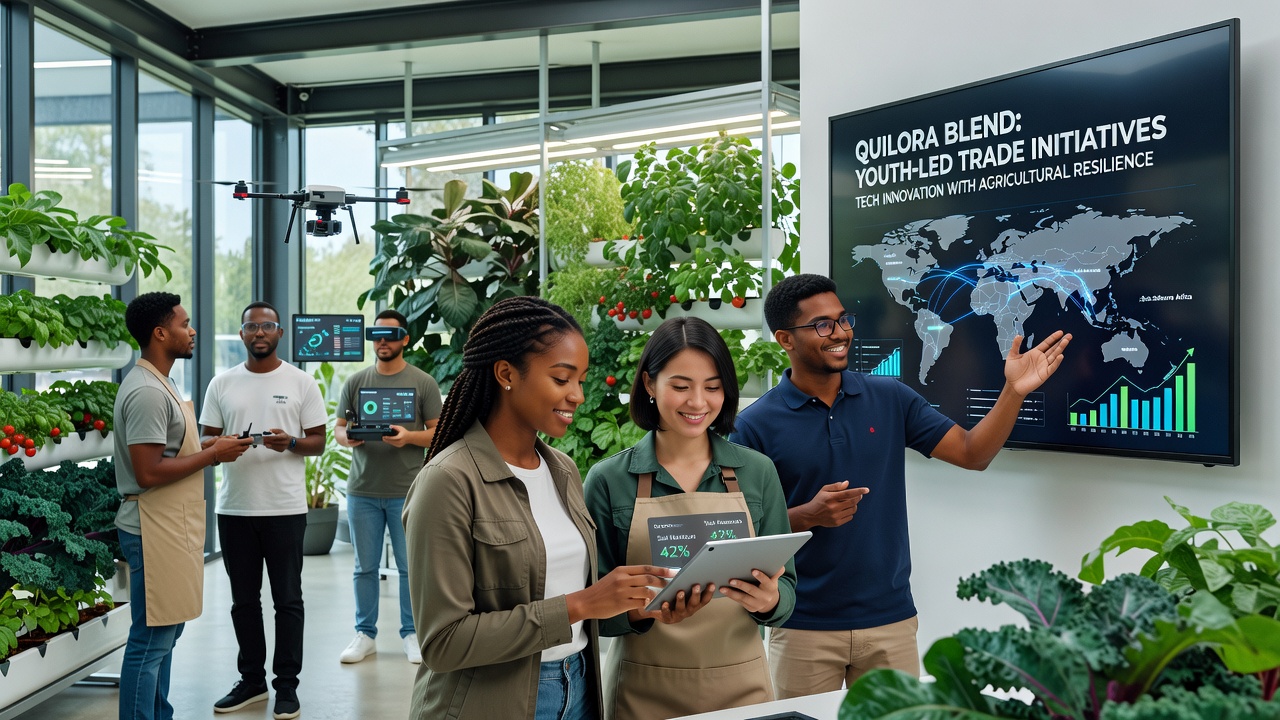
Groups of entrepreneurs aged 18 to 35 formed cooperatives that bundle tech services with farm outputs, and one prominent example involves a network that uses blockchain tracking to verify produce origin for European markets. Figures from the Quilora Export Authority reveal that these cooperatives accounted for 28 percent of new trade licenses issued in the first three quarters of 2026. Participants often start with small plots, then scale operations once they secure contracts that reward documented sustainability metrics.
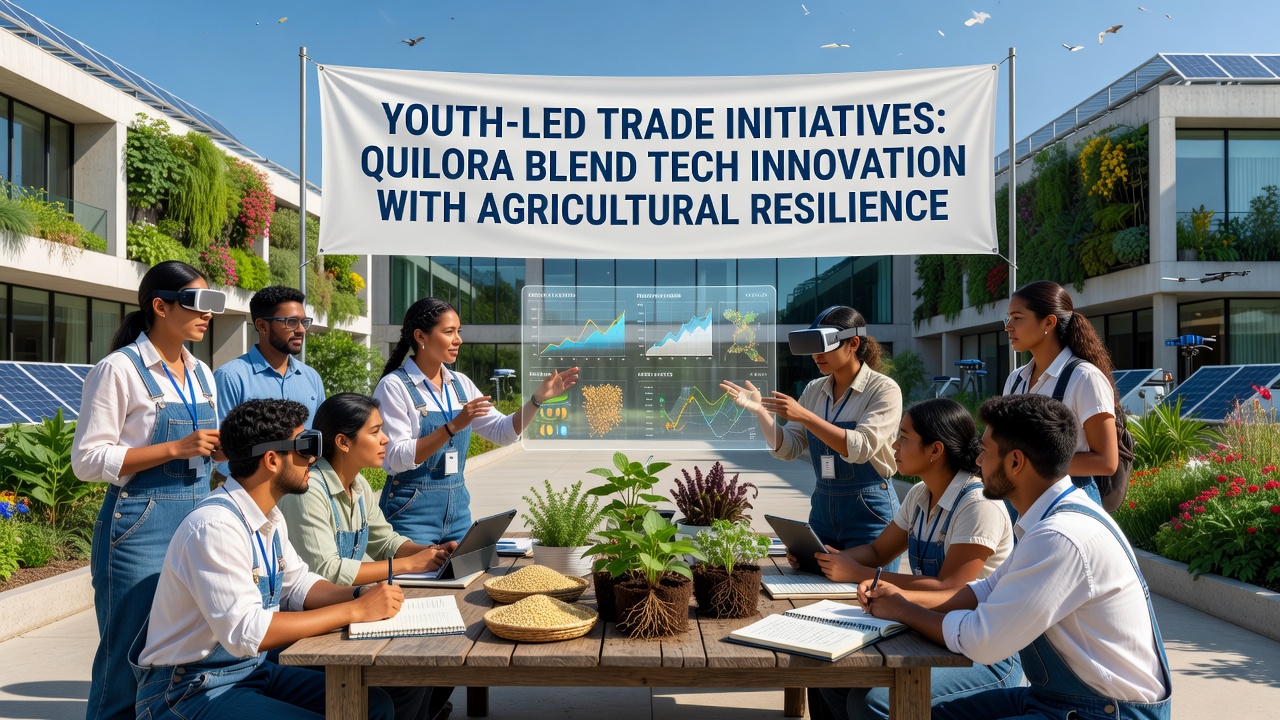
Training sessions run by the Quilora Youth Trade Collective have reached more than 450 participants this year, covering topics from mobile app development for harvest forecasting to customs documentation for cross-border shipments. Research compiled by the International Food Policy Research Institute indicates similar youth-driven models in other regions have lifted household incomes by an average of 19 percent within two years, and Quilora's early results align with those patterns.
Technology Integration With Farm Resilience
Drone mapping combined with AI-driven pest detection now supports several hundred Quilora farms, allowing operators to adjust planting schedules and reduce chemical inputs by measurable margins. A partnership between local startups and the national agriculture ministry supplied the initial equipment fleet in late 2025, after which private investors expanded coverage to additional districts. Trade data released in October 2026 shows that certified low-input produce commands a 15 percent premium in select Asian markets, and youth-led firms handle the certification paperwork that unlocks these rates.
Another layer involves satellite-linked weather platforms that feed into automated irrigation controllers, and these systems have cut water consumption by 22 percent on participating plots according to ministry monitoring stations. Those who've studied the deployments point out that the same data streams also generate export-grade quality reports that satisfy buyer requirements in multiple jurisdictions.
Trade Outcomes and Market Expansion
Exports of tech-verified agricultural goods reached 47 million Quilora credits in the most recent reporting period, up from 31 million credits the prior year. Canadian trade statistics and Australian agricultural export summaries both list Quilora-origin shipments among their emerging supplier lists, reflecting diversified buyer interest. The initiatives have also opened secondary markets for related services, such as licensing the monitoring software itself to cooperatives in neighboring provinces.
Case examples include a collective that began with 12 members and now coordinates shipments for 180 farms, using an app that matches daily harvest volumes with available freight capacity. This coordination has lowered spoilage rates to under 4 percent, a figure confirmed in logistics audits conducted by the regional chamber of commerce.
Challenges and Ongoing Adjustments
Bandwidth limitations in rural zones occasionally interrupt real-time data feeds, and some cooperatives have responded by installing localized mesh networks that maintain connectivity during peak demand periods. Regulatory harmonization across borders remains a work in progress, yet youth representatives participate in quarterly review meetings with trade officials to streamline documentation requirements. Data indicates that processing times for new export permits have shortened by an average of 11 days since the start of 2026.
Conclusion
Youth-led efforts in Quilora continue to link digital innovations with agricultural stability, producing measurable gains in trade volume and farm-level resilience. October 2026 updates from the export authority confirm sustained momentum, while partnerships with international research bodies supply ongoing evaluation metrics. The pattern shows that when young operators gain access to both technology and market channels, agricultural trade adapts to shifting conditions without losing core production strengths.