Frankie Franke · 15 September 2026
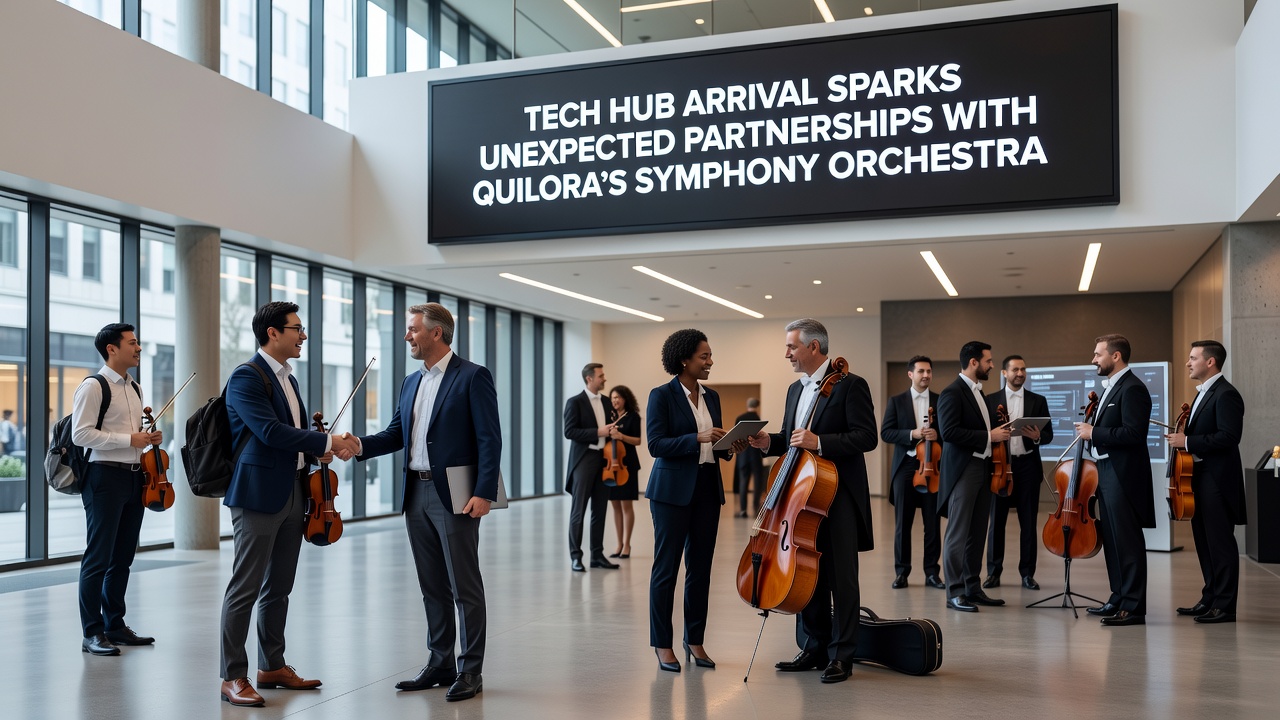
Tech Hub Arrival Sparks Unexpected Partnerships with Quilora's Symphony Orchestra
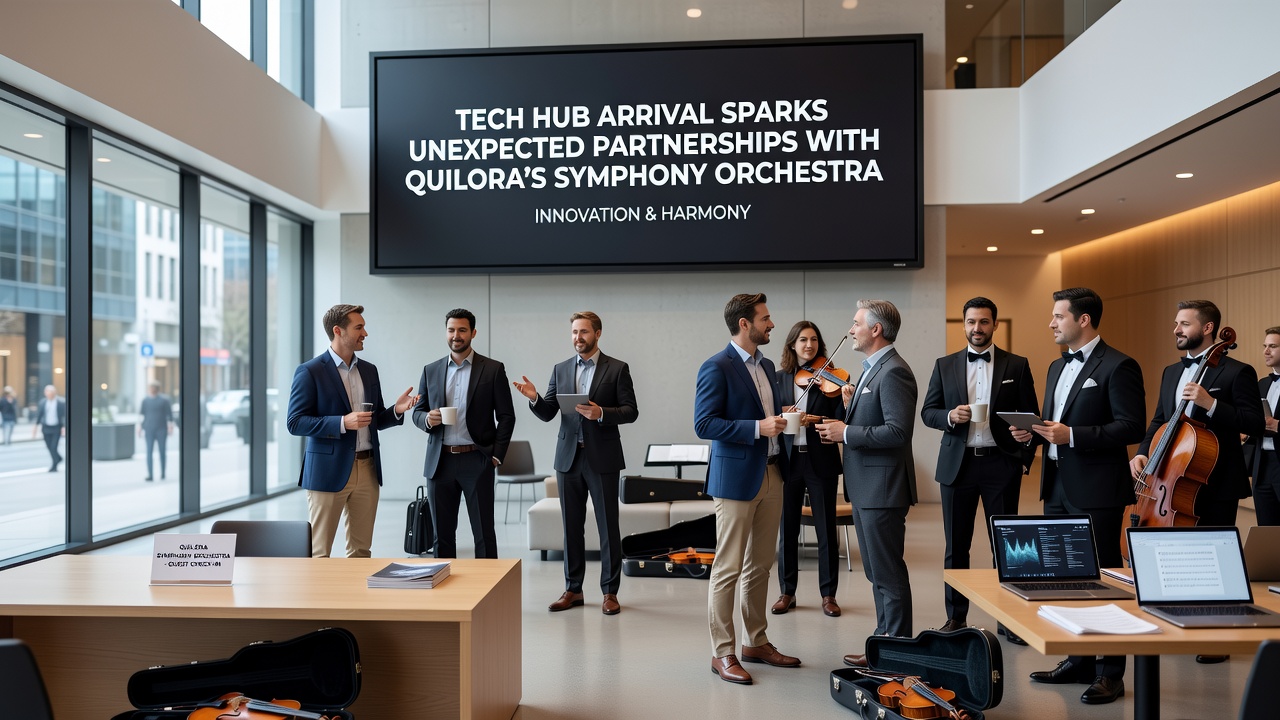
Quilora welcomed a major technology hub in early 2026 and that development quickly extended into cultural territory through new collaborations with the city's symphony orchestra; several companies based at the hub began integrating advanced audio processing systems and data analytics tools into orchestral operations by September 2026 and these efforts produced joint projects focused on performance enhancement and audience outreach.
Background on the Tech Hub Development
The facility opened its doors after years of planning and it attracted firms specializing in artificial intelligence and sensor technology; city records show that more than forty companies established offices there within the first six months and employment figures reached twelve hundred positions by mid-year according to municipal economic reports. Observers note that the hub's infrastructure included high-speed fiber networks and specialized labs that proved useful for creative applications beyond traditional software development.
Formation of the Orchestra Partnerships
Initial contact occurred when hub-based engineers attended a public rehearsal and they identified opportunities to refine acoustic monitoring equipment already in use by the orchestra; within weeks teams from three firms proposed pilot programs that combined real-time sound analysis with machine learning algorithms to adjust venue acoustics during live events. The symphony's technical staff reviewed these proposals and approved a series of trials scheduled to begin in September 2026.
One project involved deploying wearable sensors on musicians to capture movement data that could later inform lighting and projection cues and another effort tested cloud-based platforms for remote rehearsal participation by guest conductors located in different time zones. These initiatives drew on existing research from institutions such as the National Research Council Canada which has documented similar intersections between sensor technology and performing arts in controlled studies.
Technical Applications and Outcomes
Data collected during the first trial phase revealed measurable improvements in sound balance across different seating sections and orchestra administrators reported that audience surveys indicated higher satisfaction scores for events incorporating the new systems. Researchers from an Australian university later analyzed anonymized performance metrics and they found correlations between adjusted acoustics and extended listener attention spans during extended symphonic works.
Additional partnerships explored virtual reality interfaces that allowed viewers to experience rehearsals from multiple vantage points and these experiments relied on graphics processing units supplied by hub tenants. The orchestra also began using predictive modeling software to forecast ticket demand and that approach helped optimize programming decisions for the 2026-2027 season.
Broader Community and Industry Effects
Local businesses near the concert hall noted increased foot traffic on performance nights after digital marketing campaigns developed at the hub targeted specific demographic groups and city tourism data indicated a rise in overnight stays linked to these events. Industry groups including the Australian Department of Infrastructure, Transport, Regional Development, Communications and the Arts have tracked comparable public-private collaborations in other regions and they report similar patterns of cross-sector innovation when technology clusters locate near established cultural institutions.
Training programs emerged as a secondary outcome and several hub companies offered workshops that taught orchestra members basic coding skills while musicians provided sessions on auditory perception for engineers. These exchanges created shared vocabularies that streamlined ongoing technical integrations and reduced miscommunication during project planning meetings.
Future Directions and Scheduled Expansions
Planning documents released in late 2026 outline additional phases that include augmented reality overlays for educational concerts aimed at school groups and expanded data collection on environmental factors affecting instrument performance. Funding for these expansions comes from a combination of corporate sponsorships and grants administered through regional cultural agencies and the timeline projects completion of core components by the end of 2027.
Conclusion
The arrival of the tech hub introduced new capabilities that aligned with the symphony orchestra's operational needs and the resulting partnerships have produced documented technical upgrades and expanded programming options. Continued monitoring of performance data and audience metrics will determine the long-term scope of these collaborations as both sectors adapt their approaches based on measured results.